


How to Manage a Team of AI Marketing Agents in 2026
Agents can now draft, build, research, and report parts of a marketer's day. I felt the role change most clearly when isolated outputs became an operating system I had to design: which agent owns which job, what context it can access, where it must stop, and what I review.
Managing agents adds a new layer to marketing. You still need to understand research, positioning, content, lifecycle, paid media, and analytics. You also need to specify the work, connect the handoffs, set permissions, and judge the output. The useful career question is whether you can run that system well.
One project made this concrete. I built an agent to set up our analytics dashboard inside an authenticated Google account, clicking through GA4 and Looker on its own. Its instructions contain hard stops for sign-in and OAuth prompts, permission changes, sharing, deletion, publishing, and anything sent externally. At each of those points, it pauses and hands control back to me. It also logs every setting it touches so I can audit the work afterward.
The org chart where the reports are agents
A useful model is an org chart of narrow software roles. A research agent profiles accounts and watches for signals. A content agent drafts and repurposes. A lifecycle agent runs nurture. A paid agent manages campaigns. An analytics agent builds dashboards and surfaces what changed. Each has one bounded job, which makes its instructions, permissions, and output easier to review.
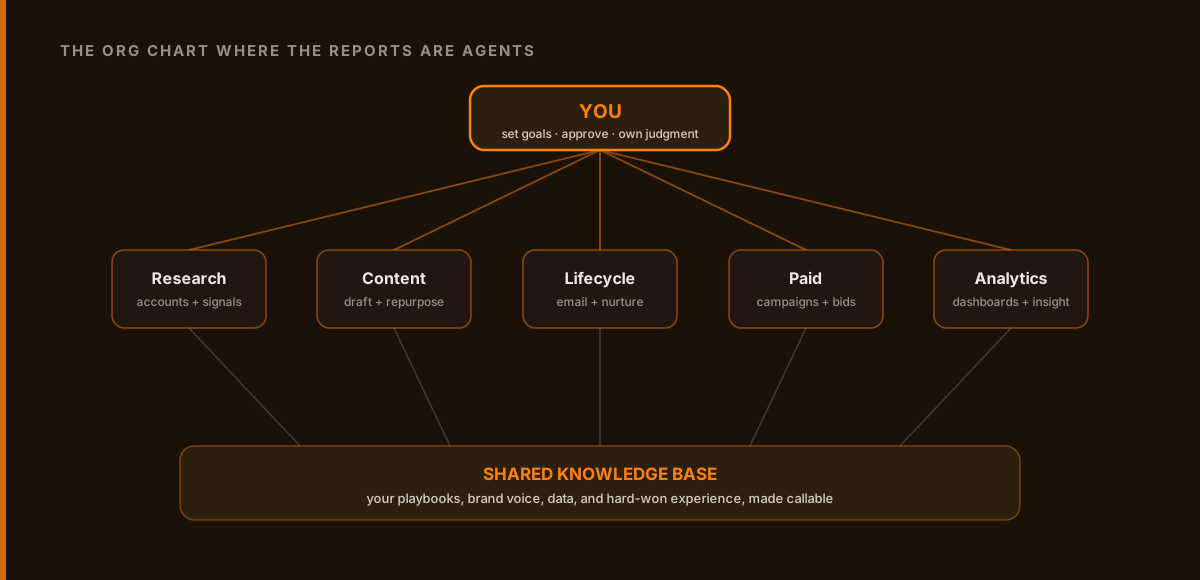
You sit at the top of that chart, and your work is a manager's work: set the goals, define the boundaries, review the output, and own the judgment calls the agents cannot make. McKinsey describes a related move from specialist in a silo to orchestrator across the whole funnel. The execution still matters. The manager is responsible for how each task contributes to the system.
Why the generalist wins now
For years, career advice rewarded depth: become the paid specialist, the email specialist, or the SEO specialist. That depth still creates valuable judgment. AI agents now make execution in a narrow task easier to access, which gives an experienced generalist more leverage across the whole function.
To direct a research agent well, you have to know what a good account list looks like. To review the content agent, you need an eye for brand and a nose for generic. To trust the paid agent, you have to understand the funnel it is bidding into. The manager of an agent team has to understand the whole chain well enough to know which agent belongs at each stage, what good output looks like, and where the handoffs break. That is a generalist's job. Specialist depth remains valuable inside each task. System ownership belongs with the person who can see and connect the whole chain.
For anyone leading marketing, the role now covers two kinds of team design. Leaders still hire, manage, and grow people. They also choose agent architecture, design orchestration, and govern how software acts inside the function. The same management instincts apply to a new operating medium. BCG argues that leaders who move early on agentic marketing can build an advantage, although the result still depends on implementation and adoption.
What the system actually looks like
None of this works as a vague "let AI run marketing." It works as an architecture, and the architecture has five parts worth naming, because each one is a place you add value as the designer.
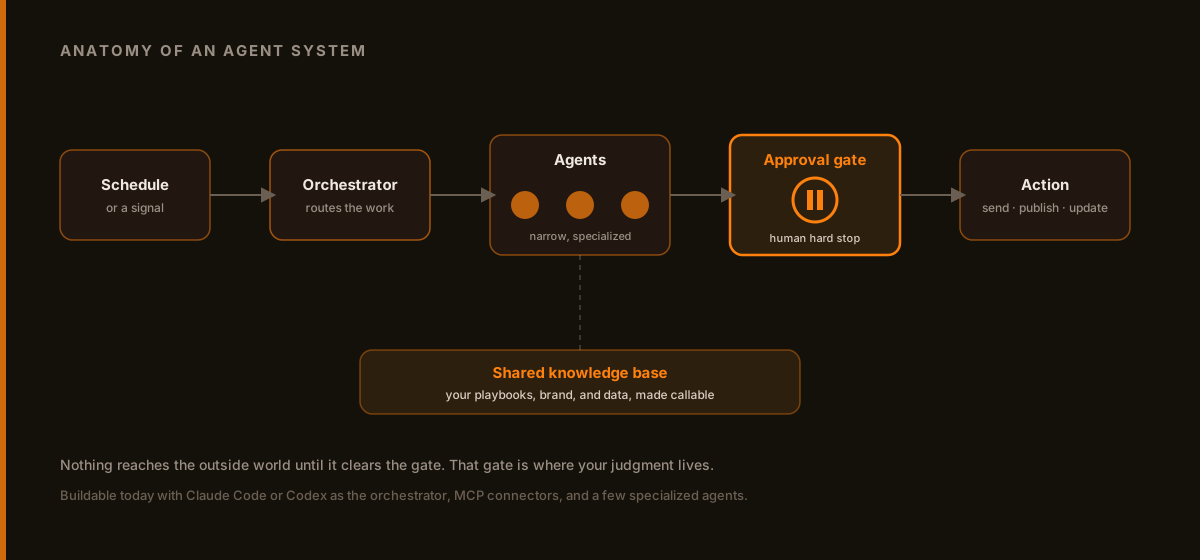
Specialized agents. Narrow, single-job agents are easier to instruct, review, and trust than one agent with a vague department-sized brief. Small scopes also make failures easier to isolate.
A shared knowledge base. This is the part most people skip, and it is where your edge actually lives. An agent is only as good as the context it can reach, so the highest-leverage thing you can do is turn your own expertise into something the agents can call: your brand voice, your positioning, your best playbooks, and your teardowns of what worked and what did not. I keep a library of demand-gen breakdowns, from a signal-based motion that doubled a company's deal size to a set of LinkedIn-ads learnings off millions in spend. The library now serves a second purpose: it makes those lessons callable, so every agent works from my judgment instead of a generic model's. Your experience becomes infrastructure the system can use.
Orchestration. Someone has to decide who runs when, because some work is sequential, some concurrent, and some adaptive. This is system design, and it is fast becoming one of the most valuable skills a marketer can have: the move from managing prompts to managing agents.
A schedule and triggers. A mature system can run on a cadence and on signals: a weekly research-and-outreach pod, an analytics agent that rebuilds the dashboard every Monday, or a lifecycle agent that wakes when someone lands on your pricing page.
Approval gates. This is the one you cannot skip. Because agents act, you have to decide exactly where a human must sign off before anything reaches the outside world.
The human stays at the gate
The dashboard workflow shows why the approval gate belongs in the architecture. The agent can perform the routine configuration work, while sign-in, permissions, sharing, deletion, and publishing remain human decisions.
That is the pattern. Safety comes from the operating design: approval gates before anything irreversible, before any spend, and before anything reaches a customer, plus a log you can review. Teams using agent orchestration commonly place gates around external communication, financial changes, and escalations. That gate is where human judgment belongs.
Build this with tools available now
The underlying components already exist. You can wire a real system together yourself: an orchestrator like Claude Code or Codex, MCP connectors to reach your tools and data, a knowledge base of your own playbooks, and a few specialized SaaS agents for bounded jobs. The dashboard setup I described uses exactly that pattern, with an agent doing real in-app work inside the limits I designed.
Start with one pod. Pick a single workflow, give it one knowledge base and one approval gate, run it for a month, and see whether it produces reliable work. Add the next pod after the first one has earned its place.
So, can you manage a team of agents?
The ability to manage agents is becoming more valuable. It combines system design, agent governance, and strategic judgment with the underrated work of turning hard-won experience into a knowledge base the agents can call. Specialist craft still helps you judge each task. Generalist experience helps you connect the tasks and run the function around them.
The hype still deserves scrutiny. Gartner expects more than 40 percent of agentic AI projects to be canceled by 2027, and many products use the agent label for conventional automation. I pressure-tested the current products in a separate review of which agents actually work. Many failed projects will begin with a purchased label and no operating design behind it.
Design the system first. Learn to specify the work, build the knowledge base, set the gates, and orchestrate the pieces. Then use the Mardex index to compare what each component actually does and what it costs once usage is counted. Marketers who can connect strategy, specialist execution, and operating judgment gain leverage across the whole function.