Best Free Marketing Tools in 2026: What Still Works
In 2023, Evernote cut its free plan from 100,000 notes to 50. Fifty. People who had trusted it with a decade of notes woke up locked out of their own second brain, and the internet was furious. Evernote did it anyway.
Evernote was an early warning. Software was becoming more expensive while established free plans were quietly shrinking. This guide looks at the squeeze, then asks the more useful buying question: which free marketing tools in 2026 still give a team enough room to build a real workflow?
First, the squeeze is real, and it is systemic
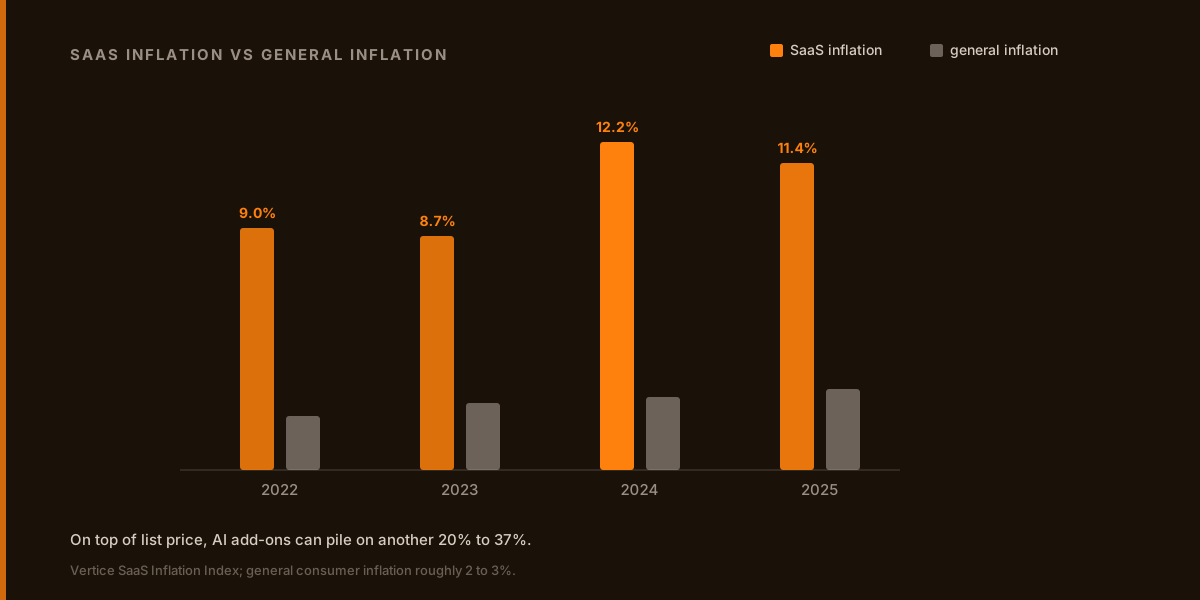
Start with price, because the numbers are blunt. SaaS inflation hit 12.2% in 2024, its highest reading ever, after 9% in 2022 and 8.7% in 2023, according to the Vertice SaaS Inflation Index. In early 2025 it was still running near 11.4%. General consumer inflation over the same stretch sat around 2 to 3%. Software has been inflating at roughly four to five times the rate of everything else, three years running.
The pattern extends well beyond a few outliers. Around 73% of software vendors raised prices in the past year, at an average of about 12%. SaaS cost per employee climbed from $7,900 in 2023 to $8,700 in 2024 to roughly $9,100 in 2025. And the headline rate understates it: 28% of contracts saw shrinkflation, the same price for less, while 60% of vendors used bundled AI features to disguise the increase.
Then there is the AI tax. AI-driven price increases are running 20 to 37%, far above the usual 3 to 9% annual bump. By category, design and developer tools led with average increases near 57%, automation near 50%, and project management near 45%, per GetPricePulse. If you are already paying for a stack that got hit by all of this, there is a whole separate playbook for pushing it back down at renewal, which I covered in the price-hack guide.
And the free tier is being hollowed out
While prices climbed, the free plan got quietly cut down. The logic is simple and a little brutal: only about 4% of self-serve free signups ever convert to paying, so to a finance team every free user is a support cost attached to zero revenue. In a market that now rewards efficiency over growth at any cost, the free tier was an obvious place to trim.
So they trimmed. Evernote went to 50 notes. Mailchimp dropped its free plan from 500 contacts to 250 and removed its automation builder entirely. MailerLite halved its free tier from 500 subscribers to 250, per its own free plan update. HubSpot's free CRM stayed free, but cut new accounts from a one-million-contact ceiling to just 1,000. Zoom capped all free meetings at 40 minutes. PlanetScale shut its free database tier off completely.
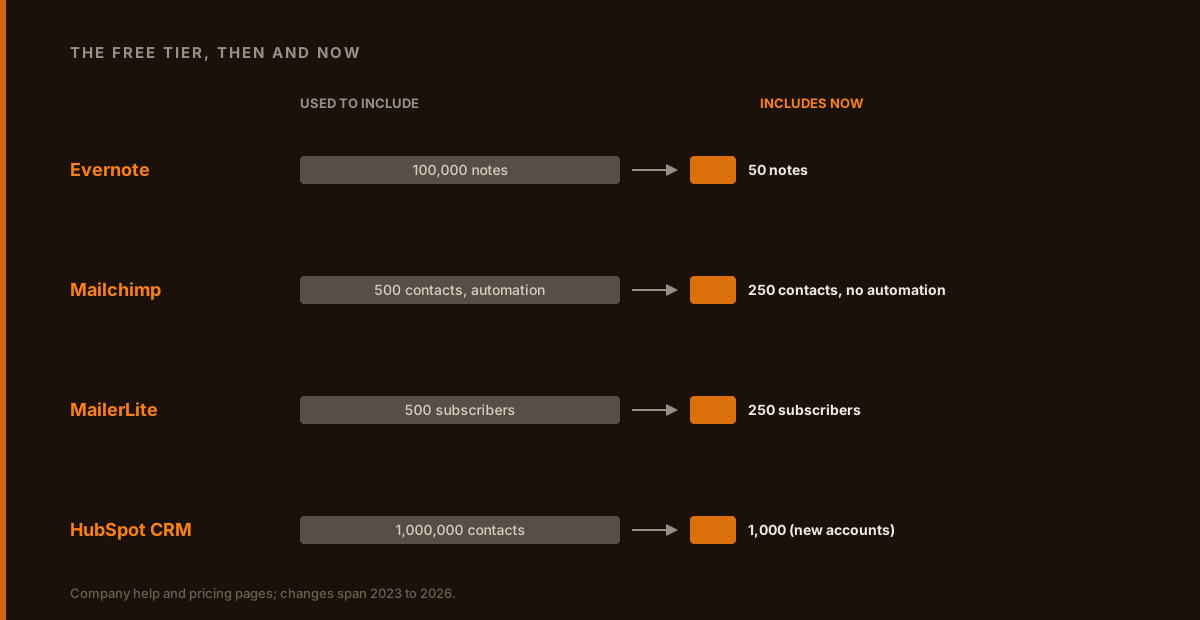
The pattern is consistent: the generous free plan that helped a tool grow gets pulled up behind it once the tool is established.
The free plans I would skip
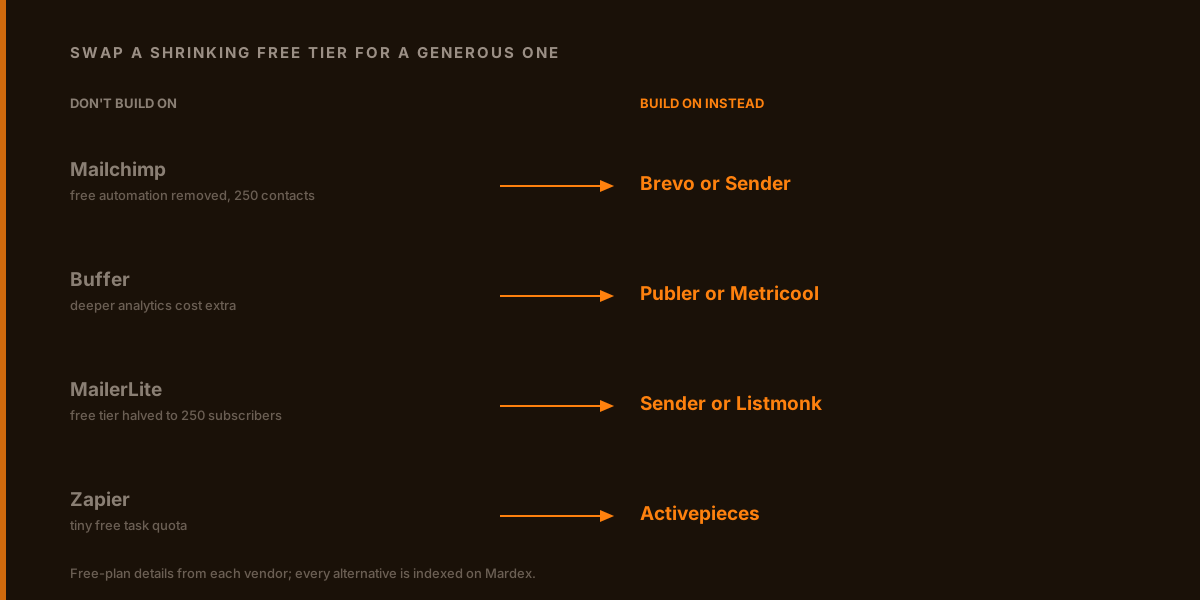
A quick warning before the good stuff. The free plans everyone reaches for first are often no longer the most generous, because they are exactly the ones getting trimmed. Mailchimp's free tier is a shadow of its old self, 250 contacts and no automation. Buffer's free plan gives you basic analytics but keeps the deeper reporting on paid tiers. MailerLite quietly halved its free tier to 250 subscribers. Zapier's free tasks run out fast. These are all still fine places to start; the point is just that if you are choosing where to build for the long run, the less famous tools below hand you more, for longer.
The free stack I would actually build
This is the part worth slowing down for, because it is where the money you are saving goes furthest. For each job: the tool I would reach for, what its free plan really gives you, and how a few of them click together. Smaller and open-source names often win here because free access supports adoption or community distribution.
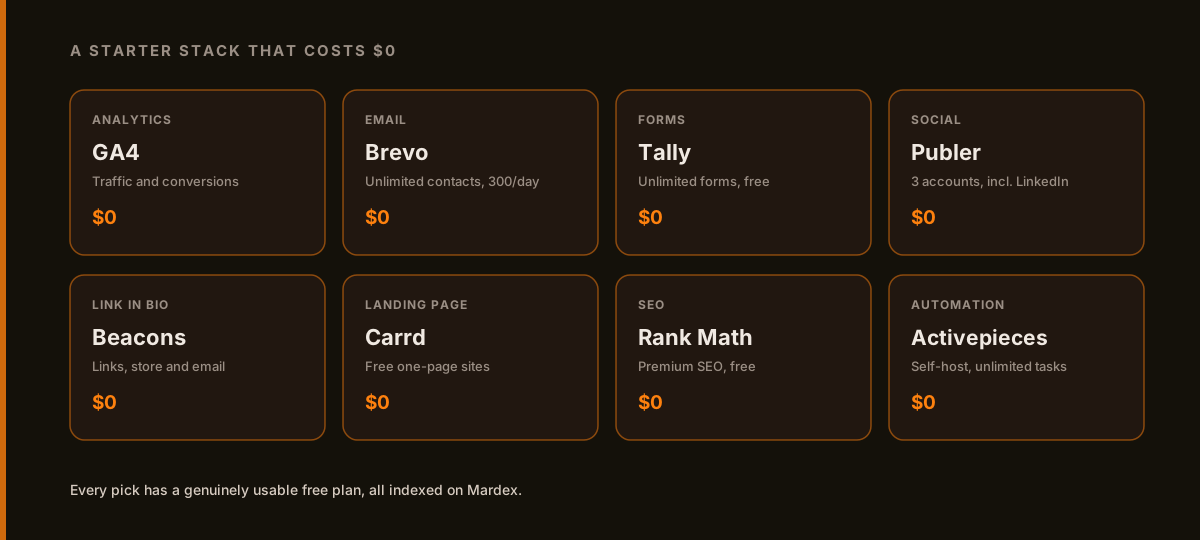
Email. I would start here, and I would start with Brevo. Its send-volume pricing lets the free plan include unlimited stored contacts and 300 sends a day, per Brevo's pricing. Mail your list now and then and you may never outgrow it. If you would rather own the whole setup, Sender's free-forever plan is the generous one: 2,500 subscribers and 15,000 emails a month, automation included, which is something like ten times what Mailchimp gives away these days. And if you are the sort who enjoys spinning up a server, Listmonk is open-source, self-hosted, and has no subscriber cap at all. Same job, three temperaments. Pick the one that matches how much you want to tinker.
Forms. For forms, I would start with Tally. Its free plan includes unlimited forms and submissions, plus conditional logic, payments, and Notion and Slack hooks, according to Tally's own comparison. Cognito Forms is the one I would test when the workflow needs formal approvals.
Simple pairings. Tally can capture a signup and Brevo can run the follow-up. Add a Carrd page when the campaign needs a dedicated destination. The startup demand-engine guide shows how those pieces fit into the wider account and nurture workflow.
Analytics. GA4 is free and answers most of what you will ask about traffic and conversions, so start there. If you care about privacy, or just want to own your own numbers, Matomo is open-source and self-hostable, and Metabase will turn whatever data you already have into dashboards you can share, also free to run yourself. I think of it as GA4 for the default view, Matomo when I want the data to be mine, and Metabase when I want to make it make sense. Worth lining all three up in the analytics category and seeing which one fits your head.
Social scheduling. This is the one where I honestly cannot choose for you, and that is the point. Publer's free plan covers three accounts including LinkedIn, with unlimited scheduling. Metricool's free plan has nicer analytics but leaves LinkedIn out unless you pay. So it really comes down to you: if LinkedIn is your world, Publer; if you live on Instagram and TikTok and love a good chart, Metricool. Both also give you richer analytics on the free plan than Buffer's basic free reporting, which is the tradeoff to weigh if scheduling is not your only need. Put them side by side in the social category.
SEO. SEO might be the prettiest example of free tools stacking up. Google Search Console gives you Google's own read on what you already rank for. Ahrefs Webmaster Tools crawls your site for 170-odd technical issues and shows your backlinks, free for sites you own. And Rank Math handles the on-page work in WordPress, with a free plan that quietly includes things Yoast wants about $99 a year for. Search Console tells you where you stand, Ahrefs tells you what is broken, Rank Math helps you fix it. Three tools, one workflow, no invoice.
Automation and design. For automation, Activepieces is the open-source answer to Zapier: self-host it and you get unlimited runs instead of rationing a handful of tasks. And for the visual side, Canva is the rare big free tier nobody has clipped yet, paired with Coolors for color palettes and Tinify for squashing your image files down.
None of this is charity, by the way. These tools are free because they are open-source, or because a generous free plan is still the best way they have to grow. Either way the value is real, and most of them live well outside the usual shortlist.
How to judge whether a free tier will last
A generous allowance today says very little about what happens after the product reaches scale. Before you build around a free plan, look for four signals:
- The free user supports the growth model. A collaboration tool benefits when free users invite colleagues. A product with high support or compute costs has more reason to tighten access.
- The free plan exposes the core workflow. A plan that includes the central job is more useful than one that gives away many peripheral features while blocking the action you came for.
- The export path is clear. Check whether you can export contacts, fields, templates, and history in usable formats before the limit becomes urgent.
- The vendor has a visible history of limit changes. Read the pricing page, help centre, and recent announcements. A free tier behaves like a contract even when no money changes hands.
Read the free tier like a contract
Free is a starting point, and $0 should never become the objective. In a market designed to move users up the pricing page, read a free tier line by line. Its limits determine the workflow much like a paid contract does.
The generous free plans still exist. They are just wearing less famous names now. When you want to find them fast, Mardex flags every tool that offers a free plan, so you can filter the index down to the free options and see, job by job, where you can start at zero.