


MarTech Renewal Negotiation: How to Pay Less in 2026
I have spent a lot of my career in and around software companies, and I have watched retention teams map what happens when a customer starts to leave. The save desk. The discount that appears after a cancellation request. The pause offer. The auto-renewal that closes the window before the buyer has compared alternatives. Vendors design each step to protect recurring revenue. Buyers can prepare for the same moment with equal care.
Most teams treat a renewal as a bill that shows up. In practice, it is a scheduled negotiation with a deadline. This is the buyer's side of the playbook: how to diagnose your stack and use the retention mechanics I have watched vendors run. The work starts with knowing the notice window, the usage data, and the alternatives before time runs out.
First, why this is worse than it used to be
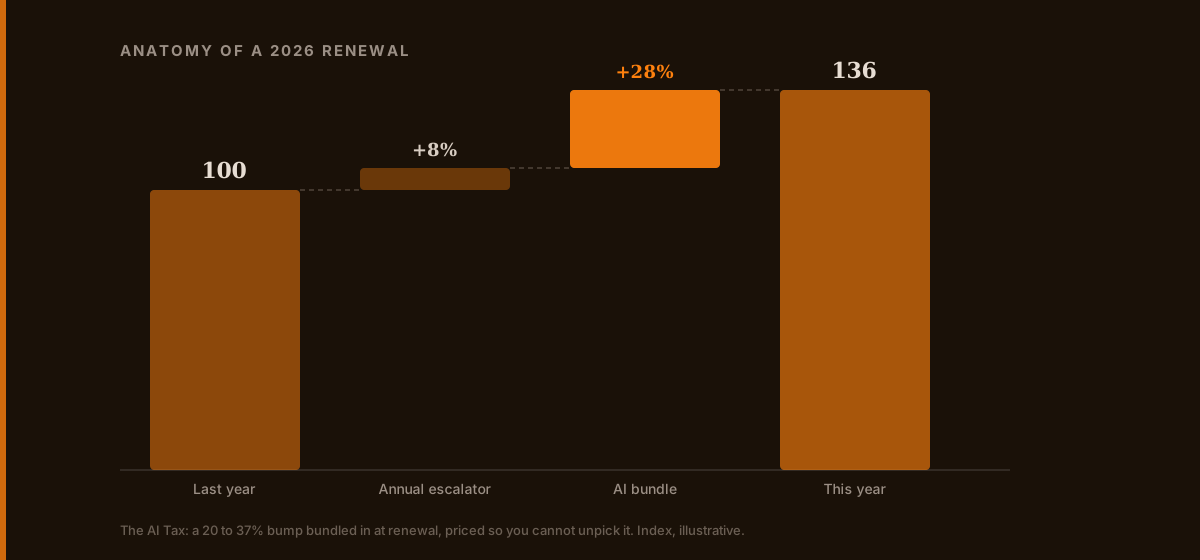
The price hike has changed shape. It often arrives through a new bundle, a usage meter, or an AI feature added to the plan. One industry analysis describes AI-related uplifts of 20 to 37 percent, although the impact varies by contract and adoption. Salesforce publishes its current list price on its pricing page, while negotiated terms and annual escalators vary by deal. The Vertice SaaS Inflation Index also shows the gap between list-price movement and what companies pay. Bundles and contract mechanics deserve as much attention as the headline price.
Step back once a year and diagnose
Before you negotiate anything, diagnose. Once a year, ideally well before any renewal is breathing down your neck, put your whole stack on one page and ask hard questions about every tool on it. This is the least glamorous and highest-return hour you will spend all quarter.
Pull utilization first. Separate assigned seats, recently active seats, and the users who depend on the tool for a business-critical workflow. Any paid seat with no recent activity deserves review. Then group every tool by the job it does and look for overlap. Flag AI add-ons nobody uses. Check whether the team is sitting on a tier it has outgrown, or one it never grew into. CloudEagle reports that stack audits can surface 30 to 40 percent underused tools. Treat that as a vendor benchmark and compare it with your own usage data.

Now the hacks: turn the retention playbook against them
Here is the fun part. Everything the vendor built to keep you can be used to pay them less.
Start before the notice window. Your leverage depends on having enough time to test an alternative, obtain approval, and migrate if the vendor will not move. Record the renewal date and the cancellation deadline when the contract is signed. Begin the audit at least one full buying cycle before that deadline, then ask for a shorter notice period during the next negotiation.
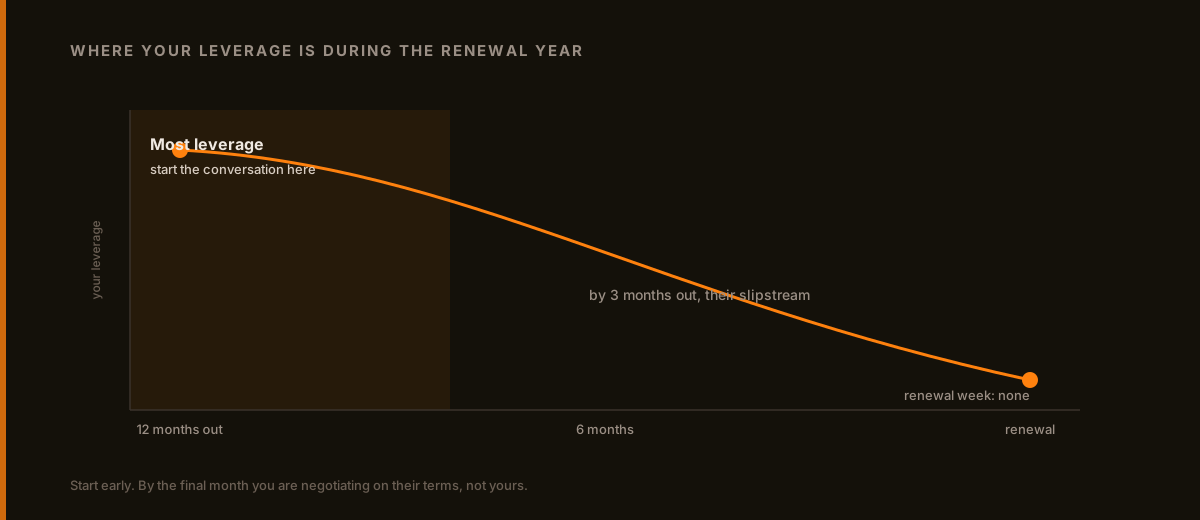
Bring usage data. "This feels expensive" goes nowhere. A report showing inactive seats and untouched features gives the vendor something specific to rightsize. Your own usage data is the most persuasive thing you can put on the table.
Bring market evidence. A vague threat to switch is easy to dismiss. Two written quotes for comparable alternatives, plus a documented migration estimate, create a rational discussion. The comparison has to match your users, usage, features, support, and contract length. Otherwise the cheaper number proves very little.
Make leaving genuinely credible. A documented exit path changes the conversation because the buyer knows the switching cost and the maximum price worth accepting. Shortlist two alternatives, estimate migration work, and identify the data that must be exported. The preparation creates a real plan B even when the final decision is to stay.
Refuse the AI Tax. If they bundled in AI you do not use, that AI has zero ROI for you, and you should say exactly that. Ask to opt out, to split the SKU, or to price to your actual adoption instead of the full feature list. If they will not separate it, that refusal is itself useful information.
Use the available retention path. Some self-serve products present a discount or pause option inside the cancellation flow. Larger B2B contracts usually route the conversation through an account manager or retention desk. Ask what rightsizing, pause, downgrade, and term options are available before accepting the renewal quote. You are using the process the vendor created for retention.
Kill the overlap. The single fastest cut is canceling the second tool that does a job another tool already does. No negotiation required, and nobody misses it.
When to stop negotiating and switch
Sometimes the math just stops working. The hike outruns the value, the vendor will not move, and the AI Tax keeps climbing every year. That is when you switch, and the same exit path that gave you leverage becomes your way out.
This is where having alternatives already shortlisted pays off twice, as negotiating leverage and as a plan B. It is exactly what Mardex is for. Before your next renewal, compare alternatives in the same category and inspect their pricing models, so you know what a switch would involve. If you are staring down a CRM or marketing-suite increase, line up the lifecycle and CRM options next to what HubSpot and the rest now charge. Compare capability and total cost separately. For some jobs, a free plan may already cover the requirement; the free tier showdown explains how to assess that option.
The buyers who pay the least usually know their options before the negotiation begins.
The whole hack, in one line
Treat a renewal as what it really is: the one moment each year when the leverage tips, briefly, toward you. The vendors know it, which is why they have built so much machinery to carry you past it on autopilot. So diagnose your stack once a year, show up early with data and options, and use the very system designed to keep you. That is the hack.