

Marketing Stack Cost in 2026: Where the Money Leaks
There is a quiet contradiction inside almost every marketing budget in 2026.
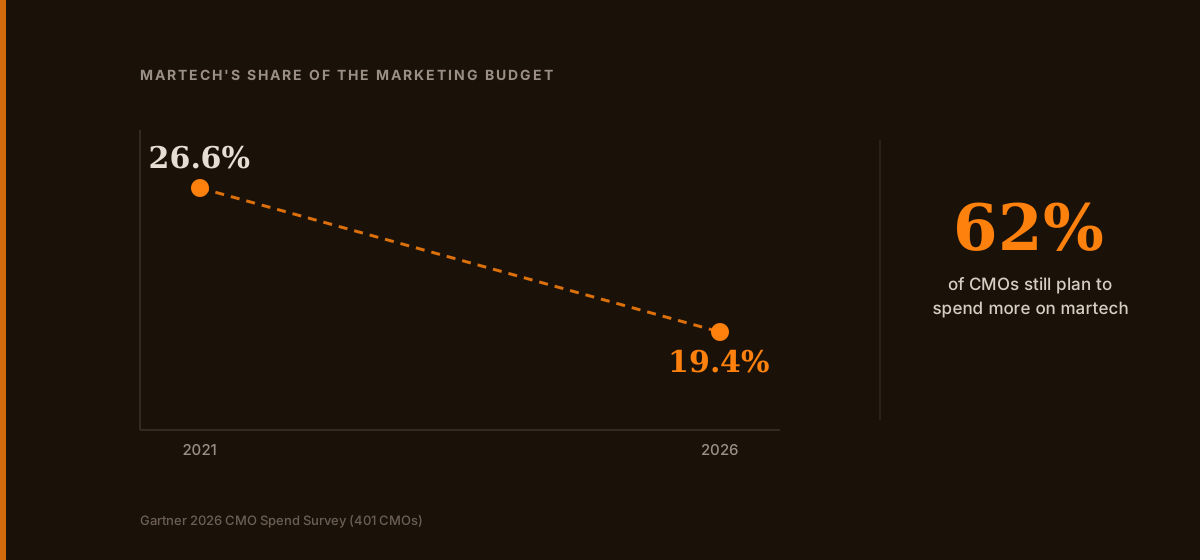
Martech's share of the marketing budget just fell to a five-year low of 19.4 percent, down from 26.6 percent in 2021, according to the 2026 Gartner CMO Spend Survey. And yet 62 percent of the same CMOs said they plan to spend more on marketing technology, not less. The slice is shrinking and the appetite is growing at the same time.
Both things are true for one reason: the number on the pricing page is the smallest number in the room. The real bill arrives later, in pieces, and a surprising share of it leaks out the back before anyone notices.
The pricing page covers only the license
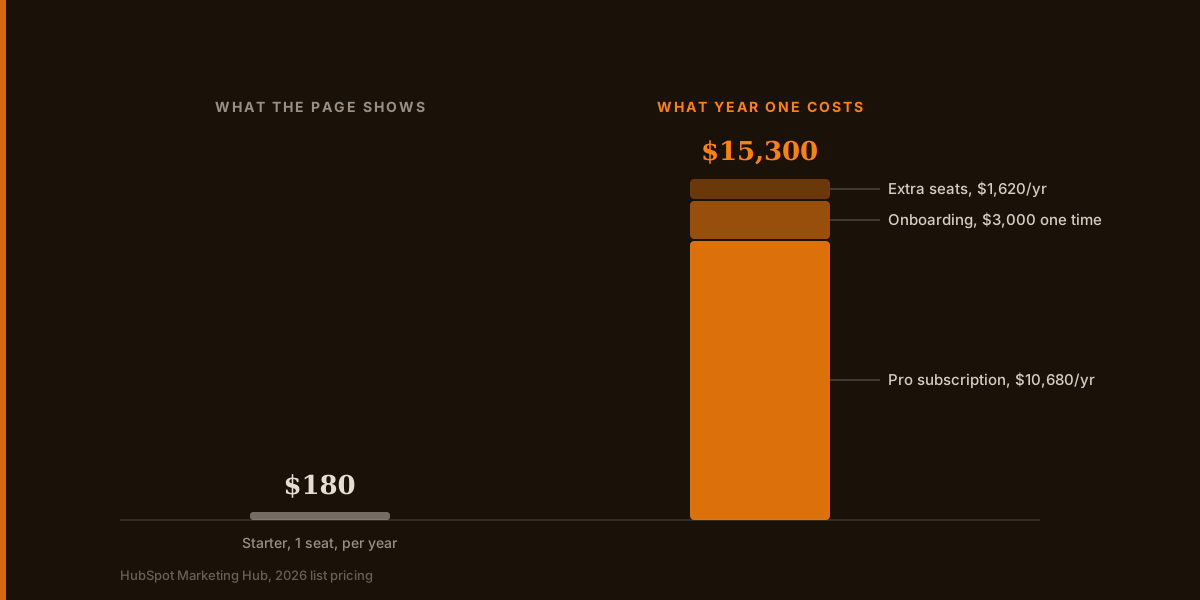
Take the most familiar example. HubSpot shows a Starter price of about 15 dollars per seat per month, and that number does a lot of quiet work. It makes the platform feel like a 200-dollar-a-year decision.
That impression disappears when the team needs real marketing automation. Professional lists at 890 dollars per month for three seats, plus a one-time onboarding fee of 3,000 dollars, plus 45 dollars per month for every extra seat, per HubSpot's own pricing. A small team that uses the product crosses 15,000 dollars in year one without doing anything exotic.
The pattern repeats everywhere once you look for it. Klaviyo gives away a genuinely useful free tier of 250 active profiles, then bills by active profile: 20 dollars a month at 500 profiles, 150 at 10,000, and 400 at 25,000, a jump of 167 percent across that last step, per Klaviyo's pricing. Salesforce raised its Sales Cloud Enterprise edition to 175 dollars per user per month in 2025, its first real increase in years, listed on Salesforce's pricing page.
Use the sticker price as the first line of the calculation. Then add the tier you actually need, the seats you will add, and the onboarding you cannot skip.
The line items nobody quotes you
Even the subscription is only the visible tip. Around it sits a second budget that no salesperson reads aloud.
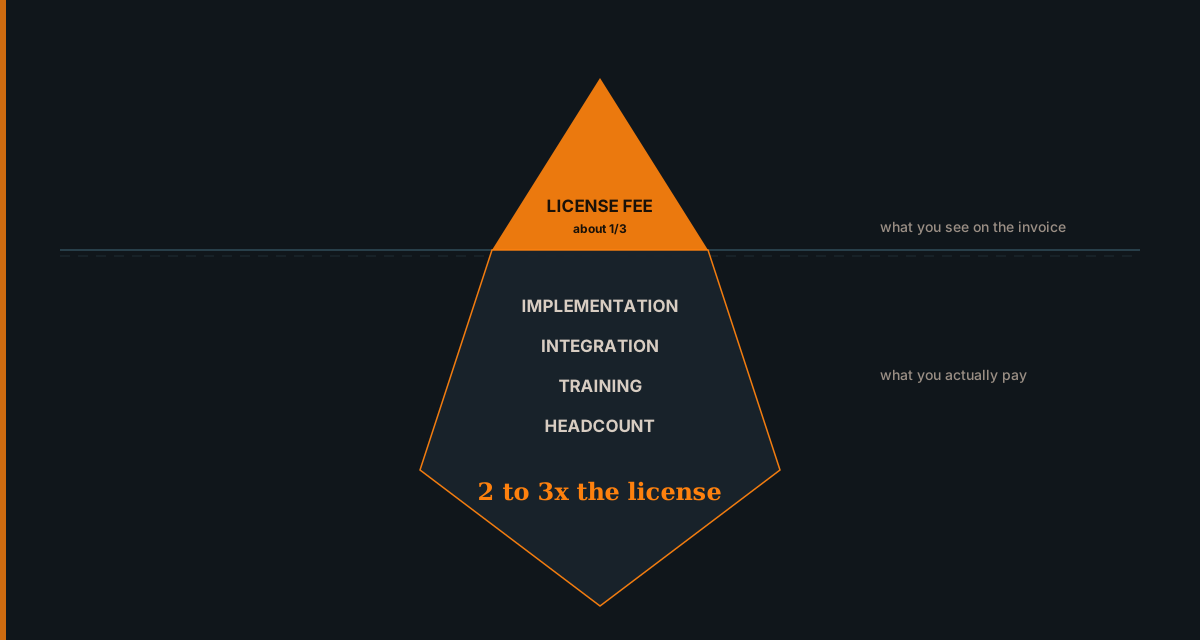
A useful field estimate comes from martech consultant William Flaiz, who works on these contracts for a living: most teams underestimate their true martech cost by 40 to 60 percent, and the license fee is often only about a third of what they end up paying. A CRM frequently costs two to three times its license in the first year once you add it all up. Treat those figures as a practitioner's estimate rather than peer-reviewed research, but anyone who has put a platform live will recognize the shape of it.
The line items below the waterline are familiar once you name them: implementation and configuration, integration work to make the tool talk to the rest of the stack, data migration and cleanup, training and certification, and the people whose week is spent administering all of it. None of that appears on the pricing page. All of it appears on the invoice.
A simple year-one comparison should include five lines:
- License and required add-ons
- Onboarding and implementation
- Integration and data migration
- Training and change management
- Internal administration time
Put the same five lines under every vendor. A cheaper license can still produce the more expensive first year once the other work is visible.
Where the money leaks
Here is the part that should sting, because it is the most avoidable. The biggest waste hides in the tools you buy and never use.
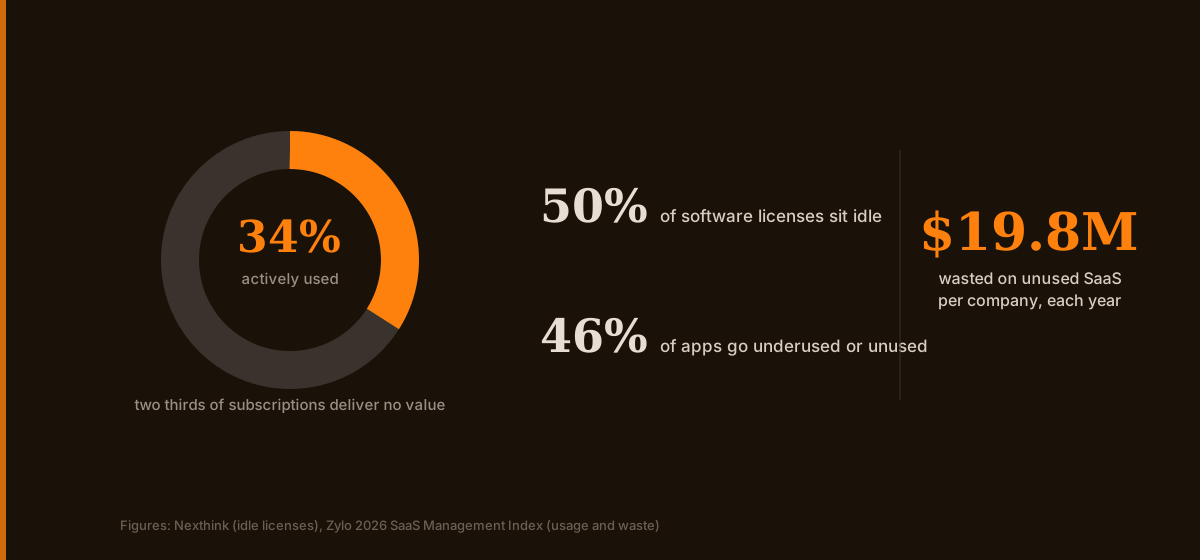
Nexthink research cited here estimates that half of software licenses sit idle. Zylo's 2026 SaaS Management Index uses different units: it reports that 46 percent of applications are underused or unused and that 34 percent of subscriptions are actively used. Those figures cannot be converted directly into a percentage of wasted spend. They do point to the same operating problem: many companies keep paying for access long after regular use has disappeared.
For a marketing team this shows up as three habits: paying for a premium tier to use one feature, running two tools that do the same job because different people bought them, and the classic, a trial that quietly converted to an annual plan that nobody remembers approving.
How to stop the leak
Most of these leaks are fixable. Start by removing unused spend and changing the questions you ask before the next purchase.
Ask what a free tier already covers. Some free plans can carry a small program for months. For email, Brevo, Klaviyo, and MailerLite all provide an entry point, although several limits were reduced in 2026. GA4 covers the core analytics questions for many small teams. Start with the job you need done, then upgrade when a documented limit blocks it. We examined free-plan durability in the free tier showdown.
Refuse to pay twice for the same job. Before adding a tool, check whether something you already own does the job. Overlap is where duplicate subscriptions breed.
Compare year-one true cost. Add the tier you will really be on, the seats you will really need, onboarding, implementation, and internal administration. Then compare. The lowest list price can produce a much larger invoice. When a contract comes up for renewal, use the renewal playbook to audit usage and alternatives before the notice window closes.
This is exactly what Mardex is built for. Browse the full category index and filter by pricing model and free plan, so you can see at a glance which jobs a free tier already covers before you commit a budget. We flag which tools offer a free plan precisely so you can shortlist the cheap-enough option first. If you are weighing the email category specifically, the lifecycle and CRM tools on Mardex line up free plans, pricing models, and limits side by side.
Make every line item earn its place
A lean stack has a job for every line item. The tier matches the work, the seats match the team, and forgotten features do not keep billing quietly. That discipline usually lowers cost because waste has fewer places to hide.
Read the full invoice before adding another tool. It often reveals a better first move: downgrade, consolidate, or remove.